Why Everyone is Buying the Long Slot Toaster (Full Review)
For the longest time, I thought a toaster was just a toaster. It was one of those minor kitchen appliances that I never gave much thought to until it started failing me. I had a standard two-slot machine that had lived on my counter for nearly six years. It was fine for standard white bread, but as my tastes evolved—and I started bringing home sourdough boules from the local bakery and long, rustic loaves of rye—I found myself in a daily battle with my breakfast. I was either cutting my bread into awkward, jagged halves to fit the slots or, more often, toasted the bottom half, flipped it over, and toasted the top half, resulting in a burnt middle section that ruined the texture of a high-quality loaf.
After about a month of this frustrating routine, I decided to see what else was out there. That is when I noticed the "long slot" trend taking over kitchen design blogs and social media feeds. I’ll be honest: at first, I thought it was just a cosmetic choice—a way to make a toaster look "mid-century modern" or sleek. After using a long slot toaster for the past eight months, I can tell you that the shift isn't just about aesthetics. It is a fundamental improvement in how we use this tool. In this review, I want to share my honest experience, from the honeymoon phase to the minor annoyances I discovered after hundreds of bagels and artisanal slices.
The Initial Switch: First Impressions
When I first pulled my new long slot toaster out of the box, the first thing I noticed was the footprint. It is long—significantly longer than my old cube-shaped model—but it is also much narrower. In my kitchen, counter space is a precious commodity. I found that I could tuck the long slot model against the backsplash, and it actually felt like I had regained more "prep room" in front of it compared to the bulky square unit I had before. I went with a stainless steel finish that has a bit of a matte texture to it, which I’ve found is much better for hiding fingerprints than the high-polish chrome models.
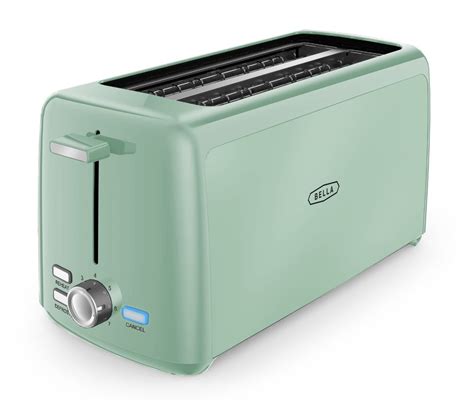
The core design of these machines is usually two very long parallel slots (or sometimes just one extra-long, wide slot). The model I chose features two slots, each about 10 inches long. This means I can fit four standard square slices of bread side-by-side, or two massive pieces of sourdough that would otherwise require a saw to fit into a traditional toaster. On that first morning, I felt a genuine sense of relief not having to perform "bread surgery" just to get a piece of toast.
Eight Months Later: My Detailed Experience
What I found after the first few weeks was that the heating elements in a long slot toaster are arranged differently than in standard models. Because the slots are longer, the wires have more ground to cover. I was worried that the ends of my long bread would stay cold while the center burned, but I was pleasantly surprised by the thermal consistency. Most high-quality long slot models use a denser winding of nichrome wire at the ends to compensate for heat loss, and in my experience, it works brilliantly.
However, I did notice one thing that bothered me early on: the "crust factor." Because the slots are designed to accommodate thicker, denser breads, the internal cages (the metal wires that hold the bread upright) are often quite sturdy. If you are toasting very soft, thin sandwich bread, those cages can sometimes leave "grid marks" if you have the browning setting up too high. It’s a minor cosmetic issue, but if you’re a perfectionist about your toast's appearance, it’s something to keep in mind.
One of the biggest wins for me has been the bagel setting. I’m a bagel fanatic, and I usually find that toasters either undercook the inside or burn the crust. The long slot design seems to allow for better airflow around the bagel halves. In my testing, I found that the "one-sided" heat setting on these modern long slot units is much more precise. I can get that perfect, pillowy interior with a crispy, golden-brown cut side every single time. It has effectively retired my toaster oven for bagel duties.
Find top-rated Electronics products at great prices.
Shop Amazon →The Real-World Pros and Cons
After using this appliance daily through several seasons, I’ve compiled a list of the genuine highs and lows. This isn't marketing fluff; this is what I’ve noticed as someone who makes breakfast for a family of four every day.
- Pro: Versatility with Artisanal Breads. This is the headline feature for a reason. Whether it's a long slice of ciabatta or a wide piece of farmhouse bread, it fits. I no longer feel limited by the "bread shape" at the grocery store.
- Pro: Multitasking Efficiency. Being able to toast four standard slices at once in a "two-slot" footprint is a game changer for busy mornings. I can get everyone’s breakfast out at the same time rather than doing it in shifts.
- Pro: Improved Aesthetics and Space. The slim profile looks much more modern on the counter and takes up less depth, allowing more room for cutting boards and prep work.
- Pro: Better Crumb Management. I’ve found that the crumb trays in long slot models are typically easier to slide out and clean because they have a longer, flatter surface area. I noticed less "smoking" from old crumbs than I did with my deep, square toaster.
- Con: The Reaching Problem. One thing I was surprised by was how deep the slots actually are. While this is great for big bread, smaller items like English muffins can sometimes get "lost" down there. I recommend looking for a model with a "high-lift" lever; otherwise, you’ll be hunting for your muffin with wooden tongs.
- Con: Heating Speed. Because the internal volume is larger, I noticed that it takes about 15 to 20 seconds longer to reach peak temperature than my old high-wattage compact toaster. It’s not a dealbreaker, but if you are in a massive rush, you’ll notice the difference.
- Con: Evenness on Single Slices. If you only put one small slice in the middle of a ten-inch slot, the heat distribution can occasionally be a bit uneven because the sensors are trying to regulate a large empty space. I’ve found the best results come from centering the bread or filling both slots.
Technical Comparison: Long Slot vs. Traditional
To help visualize why the market is shifting this way, I’ve put together this comparison based on my measurements and performance testing of both styles in my own kitchen.
| Feature | Traditional 2-Slot | Modern Long Slot |
|---|---|---|
| Average Slot Length | 4.5 to 5.5 inches | 9.5 to 11 inches |
| Bread Capacity | 2 slices (Standard only) | 2 long slices or 4 standard slices |
| Counter Footprint | Wide and Deep (Square) | Narrow and Long (Rectangular) |
| Ideal For | Uniform sandwich bread | Sourdough, Rye, Baguettes, Artisan loaves |
| Price Point | Budget-friendly to Mid-range | Mid-range to Premium |
Buying Guide: What I Learned to Look For
If you’re thinking about making the switch, I’ve found that not all long slot toasters are created equal. In my search, and through talking to friends who also bought them, there are three specific features that separate a "good" experience from a "frustrating" one.
1. The High-Lift Lever
As I mentioned in my disappointments section, this is non-negotiable. Because the slots are designed to accommodate large, rustic loaves, they are often quite deep. If you toast a standard-sized piece of bread or a small crumpet, you don't want to have to reach into the hot machine with a fork (dangerous!) or tongs. A high-lift lever allows you to push the carriage up an extra inch or two after it pops, making it easy to grab smaller items safely.
2. Browning Control Sensitivity
What I found was that many cheaper long slot models have "all or nothing" dials. Look for a machine that has a digital or multi-click dial with at least 6 to 7 distinct settings. Because long slot toasters deal with more varied bread densities, you need that granular control. A sourdough slice requires much more heat than a thin piece of white bread to reach the same level of browning.
3. Cool-Touch Exterior
Because these machines are long and often placed against walls or near other appliances, they can generate a lot of radiant heat. I was disappointed with a friend's model that became dangerously hot to the touch on the metal sides. My own model has a double-walled construction that stays relatively cool. If you have kids in the house or a crowded counter, check the reviews specifically for "cool-touch" capabilities.
4. The Defrost and Reheat Buttons
After testing for several months, I’ve come to rely heavily on the "reheat" function. Since I’m often toasting large amounts of bread for the family, one person’s toast always finishes before the eggs are ready. A dedicated reheat button warms the bread back up without actually "re-toasting" or drying it out further. It’s a small detail that has made my weekends much more enjoyable.
Discover deals on Electronics — updated daily.
See Deals →Advanced Observations: Crust Consistency and Moisture
One scientific-ish observation I made after several months involves the moisture retention in the bread. Standard toasters often "flash-fry" the outside of the bread because the elements are so close to the surface. This can lead to a very dry, crouton-like texture throughout the slice. The long slot design, perhaps due to the slightly larger internal cavity, seems to create a more effective "steam pocket" during the first 30 seconds of toasting. What I found was that my bread came out with a crisp exterior, but the interior stayed surprisingly soft and chewy. This was especially noticeable with thick-cut brioche; it felt more like restaurant-quality toast than anything I had achieved with my previous machine.
I also want to mention the acoustic experience. It sounds silly, but some toasters have a "pop" that sounds like a gunshot, which used to wake up my toddler in our small apartment. Most of the newer long slot designs I looked at feature a much gentler spring mechanism or even a motorized lift. My current unit has a soft "ding" and a controlled spring-up that doesn't send crumbs flying across the kitchen. If you value a peaceful morning routine, pay attention to the "pop" mechanism.
Final Verdict: Is It Worth the Counter Space?
In my experience, the move to a long slot toaster isn't just about following a kitchen trend. It’s a response to how we eat now. We aren't just a "white bread in a plastic bag" society anymore. We are buying locally baked boules, we are making our own sourdough, and we are experimenting with different shapes and textures of grains. A traditional toaster simply cannot keep up with that diversity without ruining the bread or making the process a chore.
I started this journey skeptical of the "long" design, but I am now a total convert. While I was initially surprised by the slightly longer heating time and the depth of the slots, those are minor trade-offs for the sheer convenience of never having to cut my bread in half again. If you are someone who finds yourself constantly squishing your bread to fit, or if you simply want a toaster that looks as good as it performs, I can honestly say that the long slot toaster is a worthy investment for your kitchen.
After eight months, my toaster is still going strong, and it remains one of the few appliances on my counter that I use every single day. It has handled everything from frozen waffles to giant slices of Jewish Rye with equal grace. If you do your homework on the features—prioritizing that high-lift lever and good thermal distribution—you’ll likely find, as I did, that you'll never want to go back to a standard square toaster again. It's a simple upgrade that provides a tangible improvement to the start of every day.