The Ultimate Setup Guide for Your Ironclaw Rgb Wireless
Introduction
The Ironclaw Rgb Wireless sits in the category of large-form ergonomic gaming mice designed for users who prefer a palm grip and reliable wireless performance. This guide explains how to get the most from the device — from first-time setup and software configuration to real-world use cases and maintenance tips. It is intended for buyers who care about comfort, consistent tracking, battery life, and customization without sifting through scattered forum posts or marketing blurbs.
Detailed Product Review and Analysis
The Ironclaw Rgb Wireless is built around three central ideas: ergonomic comfort for larger hands, multiple wireless connectivity modes, and robust customization via vendor software. The mouse typically appeals to two main groups: gamers who play long sessions (MMO, MOBA, and some FPS players who favor palm grip) and professionals who want a comfortable, programmable pointing device for productivity applications.
Design and Ergonomics
Its chassis emphasizes a broad, elongated profile that supports the whole hand. The hump is positioned to cradle the palm, reducing pressure points during extended use. Button placement is aimed at reachability rather than compactness: the main buttons, two side thumb buttons, and scroll wheel are placed for minimal finger strain. For users with large hands or those who prefer a full-palm hold, the Ironclaw’s form factor delivers immediate ergonomic benefits.
Connectivity and Wireless Performance
The Ironclaw Rgb Wireless supports multiple connectivity modes, usually including the manufacturer's low-latency wireless protocol for gaming, standard Bluetooth for multi-device pairing, and wired USB for charging and latency-free use. In practice this means the mouse is flexible enough to move between a gaming PC and a work laptop without needing to reconfigure profiles, while still offering a fast, stable connection when competitive responsiveness matters.
Sensors and Tracking
Rather than depend on gimmicks, the mouse relies on a high-quality optical sensor and firmware calibration to deliver precise, jitter-free tracking on most desktop surfaces. For the typical user this translates to accurate cursor control in productivity tasks and predictable aim in games. Users who demand the absolute last millisecond of latency should test the gaming-specific wireless mode against wired mode on their own equipment; however, many players report indistinguishable performance in everyday play.
Software and Customization
The accompanying software provides the ability to adjust DPI steps, assign macros to extra buttons, configure RGB lighting, and save on-device profiles. It is an essential part of the Ironclaw experience for anyone who expects to tailor sensitivity and buttons per game or application. The software also usually includes firmware update capability, which is important for long-term stability and compatibility.
Battery Life and Practical Use
Battery life depends on usage patterns and whether RGB lighting is enabled. In conservative settings (RGB off or minimal), the mouse often lasts multiple days between charges for average use. With vibrant lighting effects and continuous gaming sessions, users should expect shorter run times. The presence of wired mode means a quick plug-in recovers functionality while recharging, which is a practical fallback for marathon sessions.
Build Quality and Materials
Build quality typically features a sturdy plastic shell with matte coating in grip areas, textured sides for thumb traction, and reliable switch feel on the primary buttons. The scroll wheel and side buttons should remain responsive over time, although heavier-handed users may want to watch for degradation in button clicks over extended years.
Real-World Use Cases
- MMO and MOBA players: Large palm support and multiple programmable buttons allow complex keybind mappings and macros for sustained sessions.
- Productivity and office work: Comfortable shape reduces wrist fatigue; programmable buttons can map to application shortcuts and window management commands.
- Long-session gamers and streamers: Reliable wireless connectivity combined with comfortable ergonomics is ideal for multi-hour play or streaming setups.
- Hybrid users: Those who switch between a desk PC and laptop benefit from Bluetooth multi-device pairing.
Pros & Cons
Pros
- Ergonomic design tailored to large hands and palm grips, reducing fatigue for long sessions
- Flexible connectivity options (low-latency wireless, Bluetooth, wired), enabling multi-device workflows
- Extensive customization via vendor software: DPI, macros, button remapping, and RGB control
- On-device profile storage for portability between systems
- Sturdy build and textured grips that improve handling stability
Cons
- Larger footprint may be uncomfortable for small-handed users or fingertip/claw grip fans
- Potentially heavier than compact gaming mice — not ideal for very high-frequency flicks
- Battery life varies considerably with RGB and wireless mode; heavy RGB users may need frequent charging
- Software is essential for full customization; some users prefer simpler plug-and-play devices
Comparison Table
The table below places the Ironclaw Rgb Wireless alongside three common alternatives so buyers can compare attributes that matter most in purchase decisions.
Shop the latest Electronics picks on Amazon.
Shop Amazon →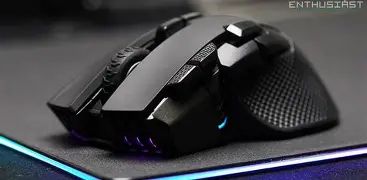
| Model | Sensor & Tracking | Connectivity | Best Grip Type | Battery Life (General) | RGB & Customization | Price Range |
|---|---|---|---|---|---|---|
| Ironclaw Rgb Wireless | High-precision optical sensor with stable tracking on most surfaces | Low-latency wireless, Bluetooth, wired USB | Palm (large hands) | Multi-day to days, depending on use and RGB | Full RGB zones and vendor software for macros/profiles | Mid-range |
| Logitech G502 Lightspeed | High-precision sensor with tunable weights | Low-latency wireless, wired | Versatile (palm/claw) | Multi-day with conservative use | RGB, strong software suite for macros | Mid to high |
| Razer Basilisk X / Hyperspeed | Accurate optical sensor tuned for gaming | Low-latency wireless, Bluetooth | Claw/palm (medium hands) | Long battery life in Bluetooth mode | Limited RGB or single-zone, basic customization | Lower to mid |
| Corsair Dark Core RGB (compact wireless) | Reliable optical sensor designed for gaming | Low-latency wireless, Bluetooth, wired | Palm/claw (medium hands) | Multi-day, varies with RGB | Full RGB and robust software | Mid-range |
Setup and Optimization Guide
Below is a step-by-step walkthrough to get the Ironclaw Rgb Wireless ready for daily use. These instructions emphasize reliability and performance tuning for common scenarios.
1. Unboxing and First Charge
- Inspect the contents: the mouse, USB receiver or dongle, charging cable, and any documentation.
- Charge the mouse fully before extended use. A brief top-up will power the device for quick testing, but a full charge ensures firmware updates and initial calibration won't be interrupted.
2. Choose the Right Connection Mode
- Low-latency wireless: Use the supplied wireless receiver when gaming competitively or when minimal input lag is important.
- Bluetooth: Use for office laptops and multi-device setups when convenience and battery saving are priorities.
- Wired: Use while charging or when absolute lowest latency is required (or to troubleshoot wireless issues).
3. Install Vendor Software
Install the manufacturer's software (commonly called iCUE for certain brands). This enables firmware updates, DPI configuration, macros, lighting profiles, and profile storage. After installation:
- Check for firmware updates and apply them while the mouse is charged and connected.
- Create a profile for each main use case (e.g., “Work”, “FPS”, “MMO”) and save one to on-device memory if available.
4. Configure DPI and Polling Rate
Set DPI steps that match real-world sensitivity needs. Instead of picking extreme values, choose three to five DPI stages that allow comfortable transitions between tasks (e.g., high DPI for desktop navigation, mid DPI for general gaming, lower DPI for precision aim). If polling rate settings are exposed, use the default gaming rate for competitive play and a lower rate when battery life is a priority.
5. Map Buttons and Macros
Assign thumb buttons and any extra inputs to functions that reduce hand travel and improve efficiency:
- Productivity users: map common shortcuts (copy/paste, window switching, media controls).
- Gamers: assign frequently used abilities, quick-scope toggles, or inventory keys; avoid overly complex macros that could violate game policies.
6. Optimize Surface and Feet
Use a low-friction mousepad appropriate to the style of play. Clean the mouse feet periodically to prevent debris build-up, which can affect glide consistency. For uneven surfaces, a cloth or dedicated gaming pad improves sensor accuracy.
7. Lighting and Power Trade-offs
If battery life is a top priority, reduce or disable RGB effects. Many users configure a battery-saving lighting profile that disables dynamic effects and uses minimal illumination while keeping the device visually identifiable.
Troubleshooting Common Issues
- Intermittent connectivity: Re-seat the USB receiver, check for RF interference, and ensure firmware is up to date.
- Poor tracking: Clean the sensor area and test on a mousepad. Update sensor firmware through the software if available.
- Software not detecting mouse: Try a different USB port, reinstall the vendor software, or use a fresh cable for wired connection.
Buying Guide: What to Consider Before Choosing the Ironclaw Rgb Wireless
When considering the Ironclaw Rgb Wireless, buyers should evaluate the following factors to ensure the mouse fits their needs.
1. Hand Size and Grip Style
Measure hand length and width or compare to a current mouse. The Ironclaw is tailored to larger hands and palm grips. If a user prefers fingertip or claw grips, they should try similar-sized mice first or consider more compact models.
Find top-rated Electronics products at great prices.
View Offers →2. Intended Use
Identify primary use cases. For MMO players who need multiple macros and comfort across long sessions, a large ergonomic mouse is appropriate. Competitive FPS players who value rapid flicks may prefer lighter or smaller mice with different balance characteristics.
3. Wireless Requirements
Determine whether low-latency wireless is critical. If the user frequently switches between devices, Bluetooth multiprofile capability adds convenience. If reliability in tournaments is essential, check for certifications or user feedback on wireless stability.
4. Software and Ecosystem
Confirm that the vendor's software supports the desired customizations, such as multi-layer macros and on-device profile storage. Consider how the mouse will integrate with existing peripherals and whether a common software ecosystem (keyboard, headset) is preferred.
5. Battery Life and Charging
Decide acceptable trade-offs between RGB aesthetics and battery longevity. Users who cannot charge frequently should prioritize long battery life or toggles that permit conservative power profiles.
6. Budget and Long-Term Value
Evaluate warranty, build quality, and user reviews. A slightly higher upfront cost can be justified by better switches, a more comfortable form factor, and a superior wireless implementation that lasts longer in everyday use.
7. Reviews and Community Feedback
Read hands-on reviews and community threads focusing on durability and long-term performance. Pay attention to reports about button longevity, scroll wheel reliability, and long-term wireless behavior.
Maintenance and Longevity Tips
- Keep the sensor window and feet clean; a dry microfiber cloth works well.
- Avoid dropping the mouse; internal components such as the scroll encoder can be sensitive.
- Store the USB receiver in a safe place when using Bluetooth to avoid loss.
- Regularly back up software profiles if the vendor software supports profile export.
- Replace mouse feet or the cable if wear affects tracking or charging speeds.
Conclusion
The Ironclaw Rgb Wireless is a compelling choice for buyers who prioritize comfort and flexibility. Its large ergonomic design suits palm-grip users and those with larger hands, while multiple connectivity modes make it adaptable to different setups. The combination of reliable tracking, extensive customization through vendor software, and practical battery management strikes a balance between gaming needs and everyday productivity. Prospective buyers should weigh hand size, primary use case, and how much they value RGB versus battery longevity when deciding if this mouse is the right fit. With proper setup and a few simple maintenance habits, the Ironclaw can serve as a comfortable and customizable centerpiece for both work and play.