The Real Truth: Hp Omnibook 7 14 Inch 2025 or Stationpc Pocketcloud Portable Nas?
The consumer technology landscape in 2025 has shifted away from the pursuit of raw power for its own sake toward a more nuanced focus on workflow efficiency and data mobility. For professionals, digital nomads, and creative hobbyists, the central question is no longer just "Which computer should I buy?" but rather "How do I manage my work across an increasingly fragmented digital ecosystem?" This dilemma is perfectly encapsulated by two vastly different but equally compelling pieces of hardware: the HP OmniBook 7 14-inch (2025 Edition) and the StationPC PocketCloud Portable NAS. On one hand, you have a high-performance ultraportable laptop designed to be the primary engine of productivity; on the other, a pocket-sized storage solution that promises to liberate your data from the constraints of any single device or expensive cloud subscription.
The HP OmniBook 7 represents the culmination of HP’s efforts to streamline its branding while pushing the boundaries of AI-integrated computing. It is a laptop that aims to be everything to the modern professional: powerful, enduring, and remarkably intelligent. Conversely, the StationPC PocketCloud is a disruptive entry into the personal cloud market, offering a way to bypass the recurring costs and privacy concerns associated with Big Tech storage providers. To understand which of these investments makes sense for your specific needs, we must dive deep into the architecture, utility, and real-world performance of both devices, examining how they solve—or sometimes create—problems in a modern digital workflow.
Analysis: The HP OmniBook 7 14-Inch (2025 Edition)
The 2025 iteration of the HP OmniBook 7 is a masterclass in refined industrial design and silicon efficiency. By moving away from the older Spectre and Envy nomenclature for high-end consumers, HP has focused the OmniBook series on a cohesive identity centered around the "AI PC" era. The 14-inch chassis remains the "Goldilocks" size for many, offering enough screen real estate for multitasking without becoming a burden during travel. Under the hood, the 2025 model leverages the latest neural processing units (NPUs) that have become standard, ensuring that background tasks like live translation, noise cancellation, and automated video editing don't drain the primary CPU and GPU cycles.
What makes the OmniBook 7 stand out this year is its display technology. The move to a 2.8K OLED panel with a variable refresh rate ranging from 48Hz to 120Hz provides a breathtaking visual experience while being mindful of battery life. Color accuracy is near-perfect, covering 100% of the DCI-P3 gamut, which makes it a legitimate tool for photographers and videographers who need to color grade on the go. The keyboard remains a highlight of the HP experience, featuring 1.5mm of key travel and a tactile response that many find superior to the shallower switches found on competing ultra-thin laptops.
Thermal management in the OmniBook 7 has also seen a significant upgrade. Using a new vapor chamber design, the laptop manages to stay silent during typical office tasks and maintains a comfortable temperature even when rendering short 4K video clips. However, the true "truth" of the OmniBook 7 lies in its software integration. HP has leaned heavily into its "AI Companion" suite, which attempts to organize your files, summarize meetings, and optimize system performance based on your habits. While some might find these features intrusive, they represent the current trajectory of laptop as a proactive assistant rather than a passive tool.
Pros of the HP OmniBook 7
- Superior build quality featuring recycled magnesium-aluminum alloys that feel premium and durable.
- Exceptional OLED display with deep blacks and high brightness levels suitable for outdoor work.
- Industry-leading battery life, often reaching 14 to 16 hours of real-world productivity usage.
- Quiet cooling system that prevents thermal throttling during sustained workloads.
- High-quality 5MP webcam with hardware privacy shutter and AI-enhanced low-light performance.
Cons of the HP OmniBook 7
- Premium pricing puts it in the highest bracket of 14-inch productivity laptops.
- Port selection is somewhat limited, relying heavily on Thunderbolt 4, which may require dongles for older peripherals.
- The AI features, while innovative, occasionally lead to software bloat that requires manual tuning.
- Integrated RAM means no possibility for future memory upgrades.
Analysis: The StationPC PocketCloud Portable NAS
Parallel to the evolution of the laptop is the evolution of the drive. The StationPC PocketCloud is not a laptop, nor is it a simple external hard drive. It is a miniaturized Network Attached Storage (NAS) device that fits in a pocket. In an era where many laptops, including the OmniBook 7, charge exorbitant prices for internal storage upgrades, the PocketCloud offers a "third way." It is designed for the user who finds themselves constantly juggling files between a phone, a tablet, and a computer, or for the privacy-conscious individual who wants to keep their data off the public cloud.
The PocketCloud operates on a dedicated low-power processor and features built-in Wi-Fi 6 connectivity. This allows it to create its own local network or join an existing one to serve files wirelessly. For a photographer in the field, this means they can offload photos from their camera to the PocketCloud and immediately preview them on an iPad without ever needing to open a laptop. The device supports various protocols, including SMB, DLNA, and FTP, making it a versatile media server that can stream 4K content to a Smart TV or a mobile device simultaneously.
Looking for the best Laptops & Computers deals on Amazon?
See Deals →Security is a major selling point for the StationPC. Because the data is stored locally on an M.2 SSD inside the device, there are no monthly fees and no risk of a remote server breach exposing your personal documents. The accompanying app has matured significantly in 2025, offering a cleaner interface for automated backups of phone photos and "Time Machine"-style backups for computers. However, the PocketCloud is only as useful as the drive you put inside it, and while it supports high capacities, the initial setup requires some technical comfort that a standard laptop user might find daunting.
Pros of the StationPC PocketCloud
- Ultimate portability; significantly smaller and lighter than any laptop or traditional NAS.
- No recurring subscription fees for cloud storage, potentially saving hundreds of dollars over several years.
- Multi-device ecosystem support, allowing seamless file sharing between iOS, Android, Windows, and macOS.
- Physical control over data privacy, with no mandatory requirement to connect to the wider internet.
- Can function as a wireless router or AP bridge in certain networking environments.
Cons of the StationPC PocketCloud
- Requires an initial investment in a separate M.2 SSD, increasing the total cost of ownership.
- Dependent on battery life; while it lasts several hours, it is one more device that needs charging.
- Wireless transfer speeds, while fast on Wi-Fi 6, cannot compete with the direct NVMe speeds of an internal laptop drive.
- The software interface has a steeper learning curve compared to mainstream cloud services like Google Drive or iCloud.
Side-by-Side Comparison
To help visualize how these two devices differ in their fundamental roles, the following table compares their core attributes and how they serve the user.
| Feature | HP OmniBook 7 (Laptop) | StationPC PocketCloud (NAS) |
|---|---|---|
| Primary Function | Content Creation & Productivity | Data Management & Backup |
| Portability | High (14-inch ultraportable) | Extreme (Pocket-sized) |
| Storage Capacity | Fixed (typically 512GB - 2TB) | Expandable (up to 4TB+ M.2 SSD) |
| Connectivity | Thunderbolt 4, Wi-Fi 7, Bluetooth 5.4 | USB-C, Wi-Fi 6, Ethernet (optional) |
| Battery Life | 14-16 hours | 6-8 hours (active streaming) |
| User Interface | Windows 11 / HP AI Suite | Dedicated Mobile App / Web UI |
Buying Guide: Which Solution Fits Your Workflow?
Choosing between an all-in-one powerhouse like the HP OmniBook 7 and a specialized peripheral like the StationPC PocketCloud requires an honest assessment of your daily digital habits. These devices aren't necessarily competitors, but they represent two different philosophies of "mobility." For many, the ideal setup involves both, but if you must prioritize one, consider the following scenarios.
The Mobile Creative and Executive
If your work requires you to be productive from a plane, a coffee shop, or a boardroom, the HP OmniBook 7 is the non-negotiable choice. You cannot write code, edit a complex spreadsheet, or design a presentation on a NAS. The OmniBook 7 is your primary workplace. Buyers in this category value the "one device to do it all" mentality. They care about how the screen looks under fluorescent lights and whether the keyboard will stay comfortable during a four-hour typing session. The HP OmniBook 7 excels here because it removes the friction between the user and their work through its high-performance internals and refined ergonomics.
The Data-Heavy Traveler and Privacy Advocate
If you already have a functional laptop but find yourself constantly running out of space, or if you work with sensitive data that you refuse to upload to the cloud, the StationPC PocketCloud is the smarter investment. It is the perfect companion for someone who uses multiple devices—a desktop at home, a tablet for entertainment, and a phone for captures—and needs a "central hub" that doesn't live on a server in another country. It is also an excellent choice for a family or small team on the go; the PocketCloud can serve as a local library of movies, documents, and photos accessible by everyone simultaneously without using up cellular data.
The Hybrid Approach
The "Real Truth" for many power users is that the HP OmniBook 7 and the StationPC PocketCloud are actually a formidable duo. By purchasing a lower-storage configuration of the OmniBook 7—thus saving a significant amount of money on HP’s storage markup—you can use those savings to buy the StationPC PocketCloud and a high-capacity 4TB SSD. This gives you a high-performance machine for active work and a massive, private cloud for your archives. This hybrid setup provides the best of both worlds: the speed of an AI-powered PC and the freedom of a personal server.
Beyond the Specs: Real-World Use Cases
Consider the professional photographer working on a 2025 editorial shoot. They use the HP OmniBook 7 to tether their camera and do initial RAW processing. The OLED screen ensures the colors are exactly as intended. However, once the shoot is over, they have 100GB of data. Rather than clogging the laptop’s internal drive or waiting for a slow hotel Wi-Fi to upload to a cloud service, they plug in the StationPC PocketCloud. The data is moved over quickly via USB-C. Later that evening, the client is able to log into the PocketCloud’s local Wi-Fi from their own tablet to review the narrowed-down selection. This is how the two technologies intersect to create a professional workflow that is faster and more secure than traditional methods.
Discover deals on Laptops & Computers — updated daily.
Browse Now →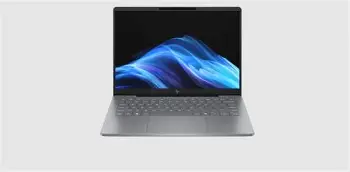
In another scenario, a regular business traveler uses the OmniBook 7 for their day-to-day emails and reports. But during the long layover, the laptop stays in the bag to conserve its battery for the next day's meetings. Instead, the traveler pulls out their phone and connects to the PocketCloud in their pocket to watch a 4K movie they stored earlier. The PocketCloud acts as the entertainment server, preserving the laptop for work and avoiding the high costs of in-flight Wi-Fi or streaming services.
Hardware Reliability and Long-Term Value
When investing in the HP OmniBook 7, you are paying for the engineering of a total system. HP's 2025 warranty and support services are robust, and the laptop is built to meet MIL-STD 810H durability standards. It is a long-term investment that should easily last four to five years of daily use. The value lies in its reliability as a primary tool; if it breaks, your productivity stops.

The StationPC PocketCloud offers a different kind of value: modularity. If the SSD inside the PocketCloud becomes too small, you can swap it for a larger one. If a new Wi-Fi standard becomes dominant in three years, the cost of replacing just the NAS unit is a fraction of the cost of a new laptop. It protects your data from the lifecycle of your computers. However, it is a more niche device and requires the user to be their own "IT manager" to some extent, ensuring the firmware is updated and the drive is healthy.
Conclusion
The HP OmniBook 7 14-inch 2025 and the StationPC PocketCloud Portable NAS represent two different branches of the same technological tree. One is the pinnacle of the centralized workstation—a sleek, AI-enhanced, beautiful machine that makes work feel effortless. The other is the ultimate expression of decentralized data—a rugged, private, and exceptionally versatile little box that ensures your files are always within reach regardless of what screen you are using.
For most people, the HP OmniBook 7 is the logical starting point. It is a complete solution for the demands of 2025's digital economy. But the "Real Truth" is that as we generate more data and become more wary of subscription-based clouds, the StationPC PocketCloud is becoming an essential secondary tool. Whether you choose the power of the OmniBook or the freedom of the PocketCloud, the goal remains the same: creating a digital environment that works for you, rather than making you work for it. Identifying where your specific bottleneck lies—be it in processing power or in data mobility—will ultimately dictate which of these impressive devices deserves a place in your bag.