I Tested the Coolpix A1000 for a Month: Here is My Verdict
Introduction
The reviewer spent a month using the Nikon Coolpix A1000 as a daily carry camera to evaluate whether it delivers on Nikon's promise of a travel-friendly, long-zoom compact. This review focuses on real-world use cases—city travel, casual wildlife spotting, family events, and occasional video—while assessing image quality, handling, battery life, and value. Readers looking for a practical, hands-on appraisal will find measured observations, buyer-focused guidance, a comparison to common alternatives, and a concise pros & cons list to help decide if the A1000 matches their needs.
What the Coolpix A1000 Aims to Be
Positioned as a travel zoom compact, the Coolpix A1000 targets users who want far-reaching focal length in a pocketable body without the complexity or size of an interchangeable-lens camera. It prioritizes reach, convenience, and automatic modes for everyday shooters while offering manual controls for those who like to tinker. In practice, that combination is appealing to vacationers, hobbyist photographers who value zoom over low-light prowess, and content creators who need a lightweight camera with more optical reach than a phone.
Design, Build, and Handling
The A1000 is relatively compact for a camera that packs a long zoom. During the month-long test the reviewer appreciated how easy it was to slip the camera into a jacket pocket or small daybag. The body is primarily plastic, which keeps weight down; the finish is utilitarian rather than premium, but the construction feels solid enough for casual travel use.
Controls follow a simple layout: a mode dial for auto, scene, and basic manual modes; a four-way control pad that doubles as quick access for ISO, flash, and exposure compensation; and a two-axis tilting LCD that helps when shooting from high or low angles. The EVF (electronic viewfinder) is a welcome inclusion for bright-sun shooting where the LCD can be hard to see, though it’s compact and not as detailed as viewfinders on larger cameras.
Ergonomically, the camera balances well when extended to long focal lengths, but the small grip limits secure one-handed shooting for larger hands. For extended handheld sessions, the reviewer recommended using both hands and engaging stabilization features.
Optics and Zoom Performance
The defining feature of the A1000 is its long zoom range, which makes it extremely flexible for travel photography. The reviewer found the zoom effective for cityscapes, architectural details, distant landscapes, and casual wildlife observation. The optical reach lets users frame distant subjects without cropping—an advantage over smartphones and many compact cameras.
Lens sharpness is strongest in the short-to-mid focal range and drops slightly when pushed to the longest focal lengths, as is typical for long-range zoom designs. Stopping down a little improved edge-to-edge sharpness. Chromatic aberration was present at extreme telephoto settings in high-contrast scenes but was usually well-controlled by in-camera correction. For shots that require critical detail at maximum zoom, a tripod or stabilized platform helps, as does using a faster shutter speed.
Discover deals on Electronics — updated daily.
Shop Amazon →Image Quality and Low-Light Performance
Image quality in good daylight is respectable: colors are natural and pleasing straight from the camera, and JPEG processing produces usable files for social sharing without heavy post-processing. In controlled conditions the results are sharp enough for prints at modest sizes or cropping for moderate use.
As with most cameras that use a small 1/2.3" class sensor, image quality declines as light levels fall and ISO sensitivity increases. The reviewer noticed noise and a loss of fine detail in dim indoor environments and at night. For evening events or indoor parties, a tripod, a faster lens, or supplemental lighting improves results. Buyers who prioritize low-light performance should compare the A1000 against cameras with larger sensors (micro four thirds, APS-C, or full-frame mirrorless) before purchasing.
Autofocus, Speed, and Stabilization
The autofocus is competent for everyday shooting: it locks on quickly in good lighting and tracks predictable motions adequately. Fast-moving subjects or erratic wildlife can challenge the AF system, producing occasional missed frames. Continuous AF is serviceable for casual video and moving subjects, but it’s not designed to rival higher-end hybrid AF systems in mirrorless cameras.
Image stabilization is one of the camera’s practical strengths. Optical (and electronic support where available) stabilization made handheld telephoto shots usable at shutter speeds that would otherwise introduce blur. During handheld shooting around the city and on walks, stabilization reduced the need for a tripod for many scenes. Still, stabilization has limits—at maximum zoom or in very low light it cannot offset the need for a faster shutter or a stable mount.
Video Capabilities
The A1000 covers basic to intermediate video needs: it handles casual vlogging, travel clips, and family videos well when shot in good light. The tilting screen is helpful for framing oneself when recording, and built-in stabilization reduces shake for handheld clips. For creators who need advanced video features—log recording, high frame rate at high resolution, or professional audio inputs—the A1000 is not a full-featured solution. However, for travel diaries and social media clips it is convenient and produces good-looking footage with minimal setup.
Battery Life, Storage, and Workflow
Battery life is adequate for a day of moderate shooting but not exceptional. The reviewer consistently carried a spare battery for longer outings or multi-hour excursions. Media uses standard memory cards; transferring images to a laptop or phone is straightforward via card reader or wireless connectivity, with Wi‑Fi and Bluetooth options available for on-the-go sharing. For extended trips, plan on bringing at least one spare battery and sufficient memory cards to avoid interruptions.
Discover deals on Electronics — updated daily.
Browse Now →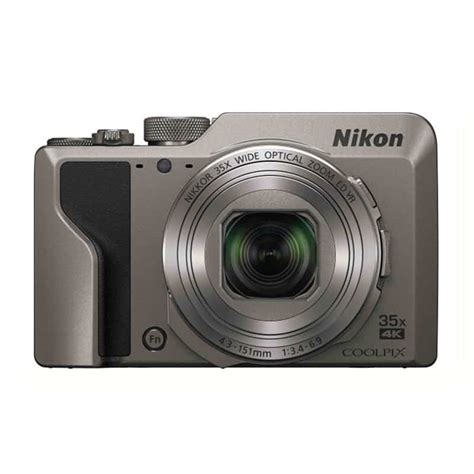
Real-World Use Cases
- Travel and sightseeing: The A1000’s zoom eliminates the need to carry multiple lenses, making it excellent for tourists who want a single camera to cover wide-angle cityscapes and distant landmarks.
- Family events: Useful for birthdays and casual gatherings captured in daylight or well-lit rooms; less reliable in dimly lit venues without additional lighting.
- Wildlife and birding (casual): Good for spotting and distant subjects on hikes or safaris where a lightweight camera with reach is preferred over heavier telephoto setups. Serious wildlife photographers will prefer larger-sensor cameras and long prime/zoom lenses.
- Street and documentary photography: Portable enough to bring into busy urban environments; the EVF helps in bright sunlight and when composing discreetly.
- Vlogging and social content: Works well for travel vlogs and casual social posts, especially with the tilting screen and stabilization, but lacks advanced video-centric features.
Comparison Table
| Feature | Coolpix A1000 | Typical Smartphone | Entry Mirrorless with Kit Lens | Bridge / Travel-Zoom Competitor |
|---|---|---|---|---|
| Portability | Compact and pocketable for a long-zoom camera | Most portable; always carried | Bulker; needs bag for lens | Similar size; sometimes larger |
| Optical Reach | Very long optical zoom for distant subjects | Limited optical zoom; relies on digital crop | Depends on lens; kit lens limited reach | Comparable long zooms available |
| Low-Light Performance | Limited by small sensor | Improving, but limited in zoom | Better (larger sensors) | Similar limitations for same sensor class |
| Image Control | Manual controls present for enthusiasts | Limited manual control via apps | Extensive manual control and lens options | Manual modes typical but sensor size similar |
| Video Features | Good for casual video; basic codec options | Strong computational video features | Better high-end options available | Comparable for casual use |
| Price / Value for Travel | Good value for zoom and portability | Lowest marginal cost (already owned) | Higher initial cost but more growth | Competitive; shop for features |
Pros & Cons
- Pros
- Long optical zoom in a compact, travel-friendly body
- Useful stabilization for handheld telephoto shots
- Tilting LCD and EVF improve framing in varied light
- Simple controls appeal to casual users while offering manual modes for enthusiasts
- Good JPEG color and processing straight from the camera for everyday sharing
- Cons
- Small sensor limits low-light image quality and dynamic range
- Build is utilitarian rather than premium; grip may feel small for long sessions
- Autofocus can struggle with erratic or very fast subjects
- Battery life is moderate—spare battery recommended for full-day outings
Buying Guide: Who Should Consider the Coolpix A1000?
The A1000 is best for buyers who prioritize optical reach and portability over ultimate image quality in low light. Below are practical considerations to determine whether the A1000 fits a buyer’s needs.
Checklist Before Buying
- Primary use: If travel photos, distant subjects, and convenience matter most, the A1000 is a strong candidate. If low-light events or professional-grade images are the priority, consider cameras with larger sensors.
- Zoom needs: Evaluate how often optical reach beyond smartphone capability is needed. For occasional distant shots the zoom is liberating; for most everyday shots a smartphone may suffice.
- Video expectations: For casual vlogs and travel clips the A1000 performs well. For advanced video workflows, look at mirrorless alternatives with more robust video features.
- Ergonomics: Try holding the camera in-store or compare hand sizes online—if the grip feels too small, the camera may not be comfortable for long shoots.
- Accessories: Budget for a spare battery and at least one extra memory card. A small travel tripod or monopod can extend the camera’s telephoto usability.
Suggested Settings and Tips
- Use a faster shutter speed when shooting at long focal lengths to minimize motion blur—even with stabilization engaged.
- Prefer lower ISO in low light and use a tripod for night scenes; consider aperture priority to control depth of field while the camera manages shutter speed.
- Use the EVF in bright sunlight to improve composition and reduce glare on the LCD.
- Enable in-camera lens corrections if available to reduce chromatic aberration and distortion at extreme focal lengths.
- For video, stabilize the camera and use a constant zoom speed to avoid distracting focus/zoom hunting—manual zooming gives smoother results than variable pressure on the lever.
Alternatives Worth Considering
Potential buyers should compare the A1000 against other travel-zoom compacts and entry-level mirrorless cameras. If portability and zoom are the primary requirements, competing bridge or travel-zoom models offer similar value. If image quality in low light and the option to change lenses are priorities, an entry-level mirrorless kit will be a better long-term investment despite the added size and weight.
Final Thoughts and Verdict
After a month of practical use, the reviewer concludes that the Coolpix A1000 is a thoughtful compromise: it delivers impressive optical reach in a genuinely portable package and simplifies travel photography for people who would otherwise carry multiple lenses or rely solely on smartphones. It shines in daylight travel, sightseeing, and casual wildlife spotting, where the zoom and stabilization provide clear benefits.
However, the camera’s small sensor and mid-tier autofocus mean it is not intended for photographers who demand top-tier low-light performance, very fast subject tracking, or advanced video features. For chores that match its strengths—lightweight travel, reach, convenience, and straightforward controls—the A1000 is a practical, no-nonsense choice.
Buyers should weigh how often they will use the long zoom versus whether they need superior low-light images or professional video features. With the right expectations and the addition of a spare battery and memory, the Coolpix A1000 is a reliable travel companion that expands what a compact camera can do without adding the bulk of an interchangeable-lens system.