A90J Oled First Look: Unboxing and Impressions
Introduction
The arrival of a flagship television often feels like a milestone event for home cinema enthusiasts, but few releases have carried as much weight as the Sony A90J Master Series OLED. As the pinnacle of the manufacturer's lineup upon its debut, this television was designed to bridge the gap between professional reference monitors and consumer-grade displays. In the world of high-end home entertainment, the A90J represents a concentrated effort to extract every possible ounce of performance from organic light-emitting diode technology. For the average buyer, the promise is simple: the deepest blacks, the most accurate colors, and a level of brightness that previously remained elusive for the OLED category.
When transitioning from a standard LED-backlit set to a Master Series OLED, the difference is immediate even before the screen is powered on. The physical design suggests a level of craftsmanship that justifies its premium positioning. In an era where many manufacturers are moving toward increasingly plastic builds to save on weight and cost, the A90J maintains a sense of density and rigidity. This article explores the initial experience of bringing this titan of technology into a living room environment, focusing on the tactile unboxing process, the sophisticated setup, and the preliminary visual performance that has made it a focal point of the TV industry.
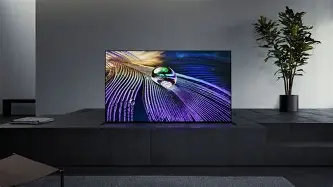
For those who prioritize cinematic accuracy—meaning they want to see the film exactly as the director and cinematographer intended—the A90J isn't just a television; it is a precision instrument. The focus here is not on flashy gimmicks or oversaturated colors but on the nuance of shadow detail, the smoothness of motion, and the integration of sound and vision in a way that remains unique to the Sony ecosystem. This first look documents that journey from the cardboard box to the first "wow" moment on screen.
The Unboxing Experience: First Impressions of Quality
Unboxing a 65-inch or larger television is usually a two-person task necessitated by the fragility of the panel. The A90J arrives in a substantial package that emphasizes protection. Upon removing the plastic locking clips at the base of the box and lifting the outer shroud, the panel is revealed, protected by a thick layer of foam and a protective cloth-like wrap. One of the first things owners will notice is just how thin the upper half of the panel is. Because OLEDs do not require a backlight, the glass itself is remarkably slender, though the A90J becomes significantly thicker at the bottom to house the Cognitive Processor XR, the sophisticated speaker system, and the internal power supply.
Included in the box is a premium remote control that sets a higher standard than the standard plastic wands found with lower-tier models. It features a brushed metallic faceplate and, most importantly, a motion-activated backlight. For those who enjoy watching movies in a pitch-black room—which is the ideal environment for an OLED—the backlighting is a vital feature. The tactile feedback of the buttons is firm, avoiding the mushy feel common in cheaper peripherals. Also included are the two heavy-duty metal feet, cable management covers, and the necessary documentation for the Master Series calibration standards.
Setting up the stand is one of the more thoughtful aspects of the A90J's physical design. Sony provides a "three-way" stand configuration. The first is a standard wide position where the TV sits flush against the furniture, creating a "floating" appearance. The second is a narrower position for those with smaller media consoles. The third is a "soundbar" position, which raises the panel by about three inches. This is a critical inclusion for modern buyers who likely own a high-end soundbar and don't want it obstructing the bottom of the screen. The feet themselves are minimalist and finished in a dark titanium color that doesn't distract from the screen during viewing.
Advanced Hardware and the Cognitive Processor XR
The "Master Series" badge is not merely marketing; it signifies that the hardware inside has been pushed to the limit of its capabilities. At the heart of the A90J is the Cognitive Processor XR. While previous processors focused strictly on artificial intelligence and database matching for upscaling, the XR processor attempts to mimic the way human beings see and hear. It divides the screen into hundreds of zones and identifies where the "focal point" of a scene is located. For instance, if a character is speaking in the foreground, the processor prioritizes the texture of their skin and the clarity of their eyes, much like how a human eye naturally focuses on a subject in real life.
Furthermore, the A90J utilizes a specialized laminate aluminum sheet behind the panel. This acts as a heat sink, allowing the OLED pixels to be driven at higher voltages for longer periods without the risk of permanent image retention or "burn-in." This thermal management is the secret sauce that allows the A90J to achieve "high brightness" OLED status. In practical use, this means HDR highlights—such as the sun glinting off a car's chrome or a lightning strike in a dark sky—have a level of "pop" and intensity that OLEDs traditionally struggled to deliver. It effectively narrows the gap between the infinite contrast of OLED and the peak brightness of high-end LED displays.
Initial Visual Analysis: Contrast and Color
The primary reason anyone invests in an OLED is for the contrast. Because each pixel can turn off completely, the black levels are absolute. During initial testing with high-bitrate 4K Blu-rays, the A90J demonstrates a mastery over shadow detail. In scenes with low-light environments, such as a cavern or a dark alleyway, the TV manages to show the subtle gradations of gray and brown rather than just crushing everything into a solid block of black. This "near-black" performance is often where OLEDs fail, yet the A90J handles it with professional-grade poise.
Looking for the best TVs & Home Theater deals on Amazon?
Shop Amazon →Color reproduction is handled via the XR Triluminos Pro system. Out of the box, the "Professional" mode provides an incredibly accurate image that requires very little calibration for most users. Skin tones appear natural, avoiding the reddish or orange tints often seen in default "Vivid" modes. The wide color gamut coverage is evident in animated content and nature documentaries, where the greens of a rainforest or the deep blues of the ocean are vibrant but never look artificial. The transition between colors is smooth, with no noticeable banding in sky gradients or sunsets, proving the effectiveness of the 14-bit internal processing.
Acoustic Surface Audio+: Sound Coming From the Screen
One of the most innovative features of the Sony A90J is Acoustic Surface Audio+. Instead of using traditional downward-firing speakers that often result in muffled audio, the A90J uses actuators placed behind the glass panel itself. These actuators vibrate the screen to produce sound. Because there are multiple actuators and two subwoofers integrated into the back, the sound actually emanates from the location of the action on the screen. If a character is speaking on the left side of the frame, the sound comes from the left side of the glass.
For many users, this system is good enough to replace a mid-range soundbar entirely. It produces a clear, forward-projected soundstage with surprisingly decent bass response for a flat-panel TV. Additionally, the A90J features a set of dedicated speaker terminals on the back, allowing the TV to act as the "Center Channel" in a larger home theater setup. This solves a common problem in home cinemas where the center speaker has to be placed above or below the screen, often making voices feel disconnected from the actors' mouths. By using the screen as the center channel, the dialogue is perfectly anchored to the center of the image.
Gaming Performance and Connectivity
While the A90J is marketed toward cinephiles, it doesn't ignore the gaming market. It features HDMI 2.1 ports that support 4K gaming at 120Hz. This is essential for owners of next-generation consoles who want the smoothest possible experience in competitive shooters or racing games. The input lag is impressively low, hovering around 12 milliseconds in Game Mode for 4K/120 content. While some competitors offer four HDMI 2.1 ports, the A90J offers two, which is generally sufficient for most users who might have one console and an eARC-connected sound system.
The TV also supports Variable Refresh Rate (VRR) and Auto Low Latency Mode (ALLM). This ensures that screen tearing is eliminated during gameplay and that the TV automatically switches to its fastest response settings when a console is detected. Playing on an OLED provides a distinct advantage in dark, atmospheric games, where the perfect contrast makes every detail in the shadows visible and immersive. The instantaneous response time of OLED pixels also means that motion blur is virtually non-existent compared to traditional LCD panels.
Pros and Cons
- Exceptional Peak Brightness: Thanks to the aluminum heat sink, this is one of the brightest OLED panels ever made, making HDR content truly shine.
- Cognitive Processor XR: The upscaling of lower-resolution content (720p or 1080p) is class-leading, making older DVDs and cable broadcasts look remarkably sharp.
- Acoustic Surface Audio+: The innovative sound-from-screen technology provides better dialogue clarity and spatial accuracy than almost any other built-in TV audio system.
- Design and Build Quality: The Master Series craftsmanship is evident in the metallics, the backlit remote, and the flexible three-way stand.
- Google TV Integration: The interface is snappy, intuitive, and provides excellent content recommendations across various streaming services.
- Limited HDMI 2.1 Ports: With only two of the four ports supporting HDMI 2.1, power users with multiple high-end consoles and a soundbar may find themselves limited.
- Price Premium: As a Master Series product, the A90J carries a significantly higher price tag than Sony's own A80J or a competitor's standard OLED offerings.
- Aggressive ABL: Like all OLEDs, the Auto Brightness Limiter can sometimes dim the screen during very bright, sustained scenes (like a hockey game or a snowy landscape) to protect the panel.
Technical Specification Comparison
| Feature | Sony A90J (Master Series) | Standard High-End OLED | Premium LED/Mini-LED |
|---|---|---|---|
| Display Tech | OLED with Heat Sink | Standard OLED | mini-LED / LCD |
| Processor | Cognitive Processor XR | Standard AI Processor | High-Performance AI Processor |
| Peak Brightness | High (~1300 nits) | Moderate (~700-800 nits) | Very High (2000+ nits) |
| Contrast Ratio | Infinite | Infinite | High (with local dimming) |
| Audio | Acoustic Surface Audio+ | Standard Downward Speakers | Integrated Soundbar/Object Tracking |
| HDMI 2.1 Ports | 2 Ports | 4 Ports (on select models) | 2 to 4 Ports |
Buying Guide: Is the A90J Right for You?
Choosing a flagship television requires balancing performance against budget and environment. The A90J is specialized for specific types of buyers. If you are a dedicated film enthusiast who primarily watches 4K HDR content in a controlled lighting environment, the A90J is arguably the gold standard. Its ability to track the EOTF (the brightness curve of HDR) with extreme accuracy ensures you are seeing exactly what the colorist saw in the studio.
For those who watch a lot of daytime television in bright rooms with many windows, the A90J is more capable than older OLEDs, but it still may not compete with the sheer raw power of a premium Mini-LED set. However, the anti-reflective coating on the A90J is excellent, doing a great job of diffusing ambient light and preventing the "mirrored" look that plagues some glossier panels. Buyers should also consider the size; while the 55-inch and 65-inch models are common, the 83-inch A90J is a true cinema-grade behemoth that provides a level of immersion that is difficult to replicate with smaller screens.
Another factor to consider is the ecosystem. If you are already a Sony user—perhaps owning a PlayStation 5 or a Sony G700 soundbar—the integration features (like Bravia Core, a high-bitrate streaming service exclusive to Sony) add significant value. Bravia Core allows for streaming at speeds up to 80Mbps, which is virtually indistinguishable from a physical disc, providing the highest quality streaming experience currently available on the market.
User Interface and Smart Features
The A90J runs on the Google TV platform, which is a significant step up from the older Android TV interface. It is cleaner, faster, and much more focused on content discovery. The "For You" tab does an excellent job of aggregating content from Netflix, Disney+, Hulu, and YouTube into a single, cohesive row based on your viewing history. The integration with Google Assistant is seamless; you can use the microphone built into the remote or the hands-free microphones on the TV itself to search for movies, adjust volume, or even control smart home devices like lights and thermostats.
Shop the latest TVs & Home Theater picks on Amazon.
Shop Amazon →Sony has also included a specialized "Netflix Calibrated Mode" and "IMAX Enhanced" support. These modes are designed to optimize the settings automatically for specific types of content. For example, IMAX Enhanced content will expand the aspect ratio and adjust the color processing to mimic the IMAX theater experience. While some might view these as gimmicks, they serve as useful presets for users who don't want to spend hours messing with individual picture settings but still want an optimized experience.
Real-World Use Cases
Imagine sitting down to watch a highly stylized film like "Blade Runner 2049" or "Dune." These films rely heavily on atmospheric lighting, deep shadows, and subtle color shifts. On a standard TV, the details in the dark corners of the frame might vanish, or the blacks might look like a muddy dark gray. On the A90J, those shadows remain inky and black, while the neon lights of Los Angeles or the sun-drenched sands of Arrakis pop with stunning intensity. This is the "OLED advantage" perfected.
For the sports fan, the motion processing of the XR processor is the standout feature. Sony has long been regarded as the king of motion handling, and the A90J continues this tradition. Whether it is a fast-moving football or a puck on the ice, the TV tracks the motion without adding the "soap opera effect" (unnatural smoothness) or excessive blurring. It retains the detail of the players and the crowd even during rapid camera pans, making for a much more comfortable viewing experience over long periods.
A Sustainable Choice?
In recent years, buyers have become increasingly concerned about the longevity and energy efficiency of their electronics. The A90J includes several "Eco" modes designed to reduce power consumption. The light sensor can automatically adjust the screen brightness based on the ambient light in your room, ensuring the TV isn't drawing unnecessary power during night-time viewing. Furthermore, because OLEDs only use power for pixels that are turned on, watching content with many dark scenes is inherently more energy-efficient than a traditional LED TV where the backlight is always active.
Regarding longevity, the inclusion of the heat sink is the biggest win. Heat is the enemy of OLED longevity, and by dissipating that heat more effectively, Sony has significantly reduced the stress on the organic materials. This suggests that the A90J is built to last for many years, even with heavy HDR usage. This adds a level of peace of mind for buyers who are nervous about making a large investment in OLED technology.
Conclusion
The Sony A90J Master Series OLED is a testament to the refinement of a technology that was once considered experimental. By combining the natural advantages of OLED with a highly sophisticated heatsink and the most intelligent processing in the industry, Sony has created a display that feels future-proof. It excels in every category that matters to a premium buyer: picture accuracy, motion clarity, and integrated sound. While the price point and the limitation of HDMI 2.1 ports may give some pause, the actual viewing experience is one of pure, unadulterated quality.
From the moment you lift it out of the box and experience the weight and texture of its premium components, you realize that the A90J is more than just a screen; it is the center of a home theater ecosystem. It respects the source material, providing a canvas that is capable of reproducing the darkest shadows and the brightest highlights with equal precision. For the consumer who refuses to compromise on their cinematic experience, the A90J remains a benchmark against which all other televisions in its class are measured.